

Search


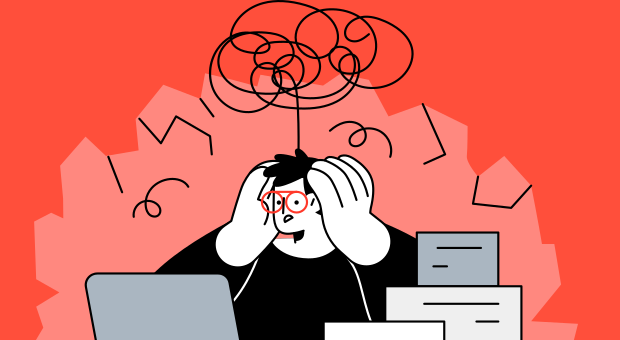
Change is experienced personally before it is understood collectively. It shows up in day-to-day work through shifting priorities, new expectations, altered routines and unanswered questions. Individuals are constantly interpreting what this means for them and adjusting how they work.
People respond to change by making rapid judgements about clarity, stability and personal impact. Confidence grows when people understand what is happening, why it matters and where they have influence. Momentum builds when effort feels purposeful and directed.
When experiences differ across a team, misunderstandings appear. One person feels energised, another feels overloaded, a third feels unsure. These differences shape behaviour, pace and decision making long before they are discussed openly.
Effective change work starts by acknowledging these lived experiences and helping people make sense of them together, so effort is focused in the same direction.
This talkshop begins with the individual experience of change. Participants reflect on recent or current changes and how those have landed for them personally. What felt clear, what felt unsettling, and where effort increased or motivation dipped.
The conversation then moves to how different people experience the same change in different ways. Differences in role, responsibility, confidence, and personal context are made visible. This helps reduce misinterpretation and frustration, and builds empathy across the group.
From there, the focus shifts to what helps people move forward. What information reduces uncertainty, what behaviours increase confidence, and where individuals need more clarity or control. These insights are grounded in real examples rather than abstract models.
The session ends with practical agreements. Clear next steps, signals to watch for, and simple actions leaders and colleagues can take to support each other through change as it unfolds.
Change is experienced personally before it is understood collectively. It shows up in day-to-day work through shifting priorities, new expectations, altered routines and unanswered questions. Individuals are constantly interpreting what this means for them and adjusting how they work.
People respond to change by making rapid judgements about clarity, stability and personal impact. Confidence grows when people understand what is happening, why it matters and where they have influence. Momentum builds when effort feels purposeful and directed.
When experiences differ across a team, misunderstandings appear. One person feels energised, another feels overloaded, a third feels unsure. These differences shape behaviour, pace and decision making long before they are discussed openly.
Effective change work starts by acknowledging these lived experiences and helping people make sense of them together, so effort is focused in the same direction.

The informality of our workshops enables participants to relax, express themselves freely and find common ground with others. This lends itself perfectly to ideation and team-building by encouraging positive interactions and idea sharing.


We're glad you asked! Simply put, a Talkshop is a cross between a talk and a workshop. They're short, punchy, thought-provoking sessions. We take a key concept and explain it clearly, then help your team explore it together to understand how it can help them in their work.

We usually recommend between 6 and 20 people, depending on how interactive you want the session to be. Larger groups can be accommodated with breakout structures.
It works just as well virtually, with tools adapted for online delivery. In fact, remote teams often benefit most from building a shared understanding of strengths, as these things are harder to spot when you’re not co-located.
Not at all. The workshop is structured and lightly facilitated to keep things comfortable and purposeful. It’s not therapy, and nobody has to overshare. We use simple, well-designed exercises that get people talking naturally with plenty of positive energy.


