About

James
Allen.

facilitator, coach, author-in-progress

I help leadership teams get on the same page. The work usually shows up as a strategy day, a leadership programme, or a culture conversation, but the underlying job is the same: making it easy for teams to work together.

THINGS I NOTICE

Almost everything I know about organisations, I've learned by sitting in rooms where people are trying to make a decision together and quietly noticing what is and isn't happening.

It's often in the pauses, the glances. The thing the marketing director said in the corridor that nobody picked up. The number that didn't get questioned. The strategic priority that everyone is nodding at but nobody is doing anything about.

Over time, the same patterns kept appearing. Pharmaceutical companies, financial institutions, technology start-ups, century-old giants, government departments, industrial manufacturers. Different sectors, different scales, same invisible forces. Once you know how to see them, you can't unsee them.

So that is what I do. I help teams see them. Then I help them build something better.

JamesFounder, Creative Huddle
The practice

What the work actually looks like.

A variety of formats, with each a way into the same question: where is this team genuinely aligned, and where could that alignment be stronger?

How I work

Six things that guide the work.

one

The room knows more than the consultant.

The team I'm working with almost always knows what's wrong. They've been living it. My job is to make it safe enough, and structured enough, to say it out loud. When I'm doing my job well, the team feels like they did the work. That's because they did.

two

Honest beats polished.

A messy honest answer is worth more than a tidy false one. I'd rather a leadership team leave a session arguing productively about something real than agreeing politely about something they'll never act on.

three

Most problems aren't about people.

When a team is struggling, the temptation is to look for who's getting it wrong. Almost always, the answer is structural. Wrong incentives, unclear decision rights, meeting rhythms that prevent the conversation from happening. Fixing the design fixes most of it.

four

Show up flexible. Stay rigorous.

The brief I'm hired for and the work that needs doing are often different things. Engagements that go well tend to be ones where I've adapted the plan on contact with reality, while keeping the rigour of the underlying framework.

five

Credit goes to the team.

If a leadership team builds something good together, that is their accomplishment. Not mine. I'm a guide for one set of conversations. They are the people who have to live with the consequences, defend the decisions, and rebuild the next time things shift.

six

Alignment is more engineering than therapy.

Getting an organisation on the same page is not soft work. It's about as concrete a discipline as I know. Diagnose, design, decide, build, hold the cadence, adjust. The fact that it involves humans doesn't make it any less of an engineering challenge. It just makes it a more interesting one.

How I got here

The short version.

Creative Huddle began as a creative thinking practice. The early work was about helping teams get better at generating ideas. Workshops on lateral thinking, design thinking, the techniques that get a room out of its rut.

What I noticed, again and again, was that the ideas were rarely the problem. A team would leave a session full of good thinking, then go back into an organisation that wasn't set up to do anything with it. The strategy didn't quite hold. The leadership team wasn't quite aligned. The culture suppressed the riskier suggestions. The good thinking died on the way back to the desk.

The ideas were rarely the problem. The conditions for the ideas were.

So the work shifted. From the front of the funnel, where ideas come from, to the deeper part, where organisations decide what to do with them. From creativity to alignment. From individual workshops to the longer, deeper work of strategy, leadership, teamwork, culture, and brand.


15years
In rooms where decisions actually get made.
200+
Senior teams worked with across sectors and scales.
5pillars
One framework, applied wherever the dark matter sits.
1book
Currently in manuscript. Notes from the field.
Selected clients

The work has taken me into some interesting rooms.

From global brands and listed institutions to scale-ups and 100-year-old charities. Will yours be next?

See ALL CASE STUDIES →
What people say

From clients I've worked with.

"His work goes beyond facilitation, it's transformative."
Steve WilliamsonGeneral Manager, Global Inkjet Systems
"You have achieved so much. Your influence and training have resulted in outcomes that exceeded my hopes and expectations."
Jenny GreenFounder & Director, AEL Outdoor Solutions
"Just want to take the opportunity to thank you again for a really great, lively, useful session. Definitely the best I’ve been part of."
Stacy-AnnHead of Global Marketing, Oxford Economics
"The best training I've ever had."
Programme participantReactive Technologies, High Performance Programme
See ALL TESTIMONIALS →
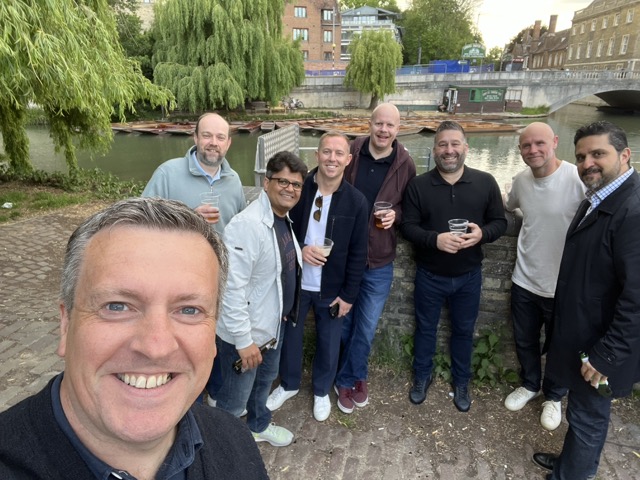
WITH A LEADERSHIP TEAM CLIENT IN CAMBRIDGE
Off the clock #1

Team bonding.

I often spend social time with client teams when we're away on multi-day off-sites, and it's always nice to wind down over a few drinks and a meal together.

I find that these dinners in between workshopping days are really valuable and enable the team to decompress and reflect on the ideas and topics they've discussed.

We also spend time getting to know each other as humans, beyond the job titles and department responsibilities.

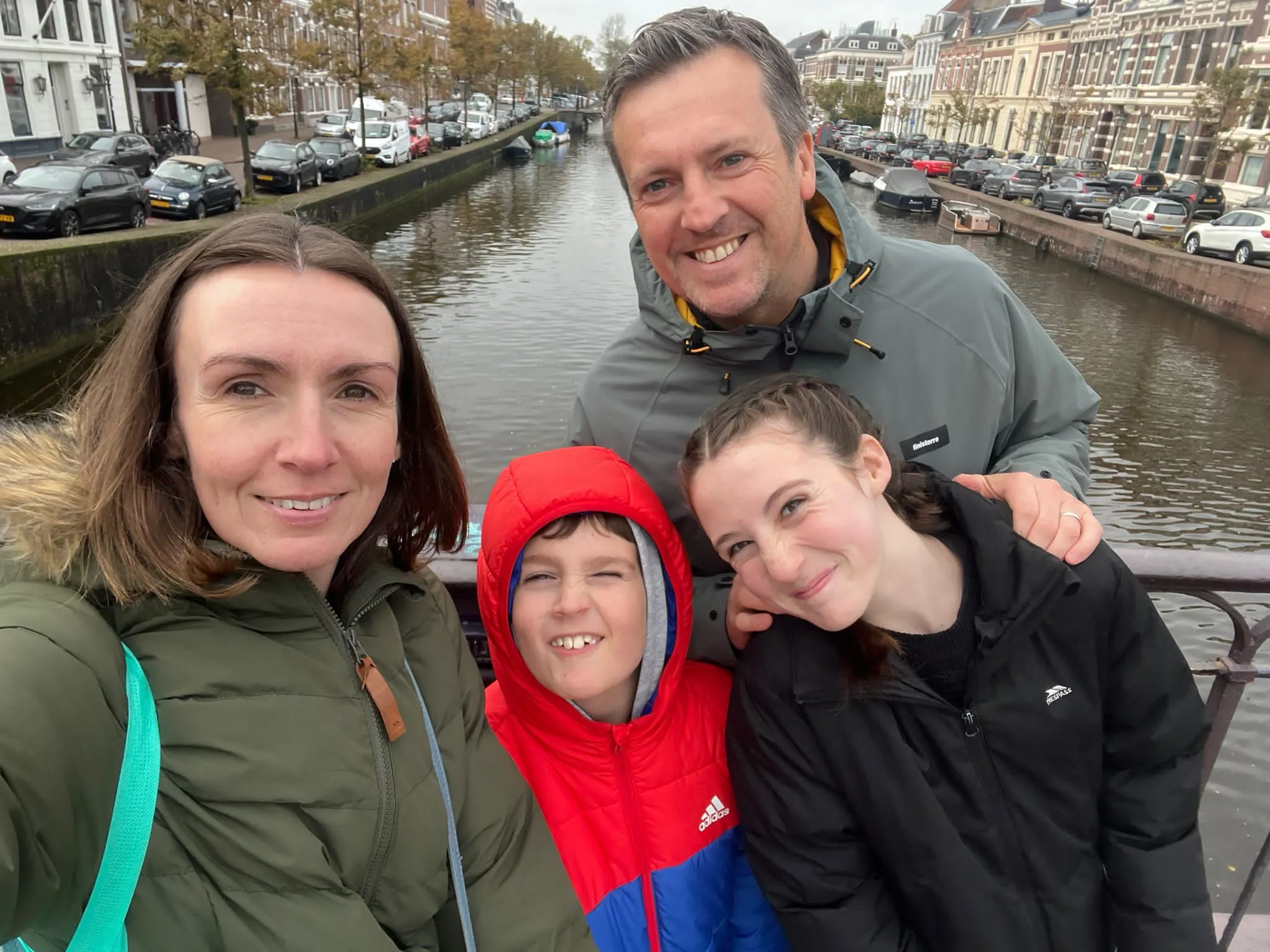
ON HOLIDAY IN THE NETHERLANDS
Off the clock #2

Family values.

Home is East Sussex, with my wife Claire and our two children. Most weeks involve some combination of swimming, running, and cycling, usually less rigorously than my training plan would prefer.

My son plays a lot of basketball, and my daughter dreams of a career on the West End stage. They are everything to me.

We're also kept busy by two cocker spaniels, who love scratches and tummy rubs and long walks on the beach.

If you've read this far

The next step is a conversation.

Most engagements start the same way: a 30-minute call, no agenda beyond what you're trying to work out. From there we either find a shape that fits, or we don't, and either is fine.

By clicking “Accept All Cookies”, you agree to the storing of cookies on your device to enhance site navigation, analyze site usage, and assist in our marketing efforts. View our Privacy Policy for more information.