


Speaking.
Talks that give leadership teams something to think about and a place to start.
Keynotes and talks on strategy, leadership, and high-performing teams, drawn from fifteen years of facilitation work with senior teams. Practical, grounded in evidence, and built to leave a room with something it can use.
From a recent keynote.
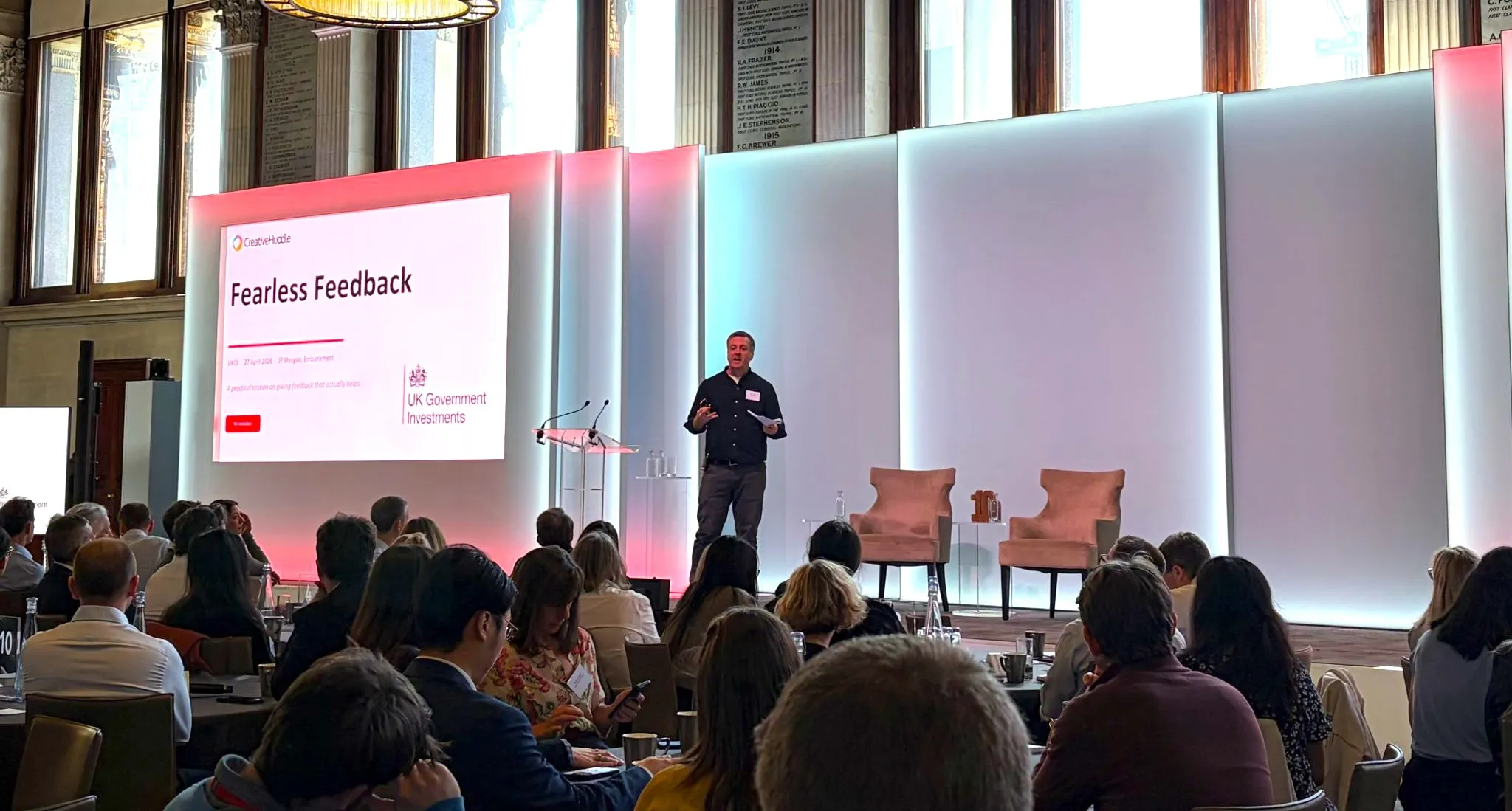
Three signature talks.
Each can be delivered as a 30-minute keynote, a 60-minute talk with Q&A, or a 90-minute interactive session. Each can also be tailored to a specific sector or audience context.
The Dark Matter of Organisations
The signature talk. Built on the central argument of my book. 97% of leaders say the strategy is clear. Just 28% of the people delivering it can name the priorities. I reveal what lives in that gap, and what to do about it.
The talk introduces the dark matter metaphor, walks through the five areas where the gap tends to open, and offersa set of diagnostic questions any leader can ask of their own organisation by Monday morning.
- A way to see whether the gap is open in your own organisation, and where.
- The single-page test, applied to your most recent strategy document.
- A clear sense of where to start, and key actions to take.
The Myth of the Grand Aligner
A CEO cannot align fifty thousand people by decision. Alignment gets made further down, by the heads of function and the senior managers who turn strategy into daily choices. Most of them have never been given the context to do it well, or the licence to act on it.
The talk reframes the job of senior leadership as building the conditions for aligned action in others. It covers what people need before they will take initiative: enough context to understand the strategy, a clear line from their daily work to it, and the confidence that acting on their own judgement is welcome.
- A clearer view of where aligned action comes from, and who creates it.
- A practical model for giving people the context and ownership that lets them act without being told.
- A specific next conversation to have with direct reports, to help them see the strategy in their own work.
The Space Between Silos
Work rarely breaks inside a team. It's much more likely to break in the gaps between them, the point where information, accountability or quality is meant to pass from one function to the next and doesn't. Almost no one maps those gaps, so no one owns them.
The talk shows how to find the places where cross-functional work stalls, and how to make sure someone owns the space where no job description quite reaches. Strong for engineering and product audiences, operations leadership, and any organisation where work crosses functional boundaries before it reaches the customer.
- A simple way to map where work passes between teams.
- A clearer view of where work stalls and why.
- Practical ways to give the gaps an owner, so work stops falling through.
Three lengths, three effects.
Match the format to what you want the audience to actually do afterwards.
The keynote
A focused argument with one central question and a clear takeaway. Suited to opening or closing a conference, or a slot inside a wider event.
- Single keynote talk
- One core argument, sharply delivered
- Stage Q&A optional, kept brief
The talk with Q&A
Full argument with examples, case studies, and Q&A with the audience. The right length for most leadership events.
- 4nutetalk minute Q&A
- One or two case studies woven in
- Audience leaves with a practical tool to take back
The interactive session
A talk with a working exercise embedded in the middle. The audience does structured work in pairs or small groups, then we close on the implications. Best for off-sites and leadership development days.
- 30-min talk, 30-min exercise, 30-min debrief
- Audience produces something concrete
- Strongest for internal events where action matters
A highly interactive session, full of energy, insightful ideas and new ways of working.
I have no hesitation in recommending.
From enquiry to event.
Enquiry
Initial email or call about the event, the audience, the date, and what you want the audience to leave thinking or doing.
Brief
A 30-minute scoping call to choose the talk, agree the format, and shape the angle to your audience. Fee agreed at this stage.
Prep
A short pre-event call two weeks ahead, to confirm logistics, tech, and any last refinements to the talk based on what's happening in your organisation.
Deliver
The talk, the Q&A, and a short follow-up note to the organiser including the slides and any recommended reading for the audience.
Get in touch.
A short note with the date, audience, and the question you want the talk to answer sets us up perfectly for a call. The diary fills up several months out, so earlier conversations are better.